6 min readArrow Industries
What Is a Column Pipe Clamp, and How Does It Carry the Load?
A column pipe clamp grips the riser pipe below a borewell cap so the weight of pipe, water, cable and pump transfers to the casing instead of to the pump. What it does, the forms it takes, and how the clamp bore is specified.
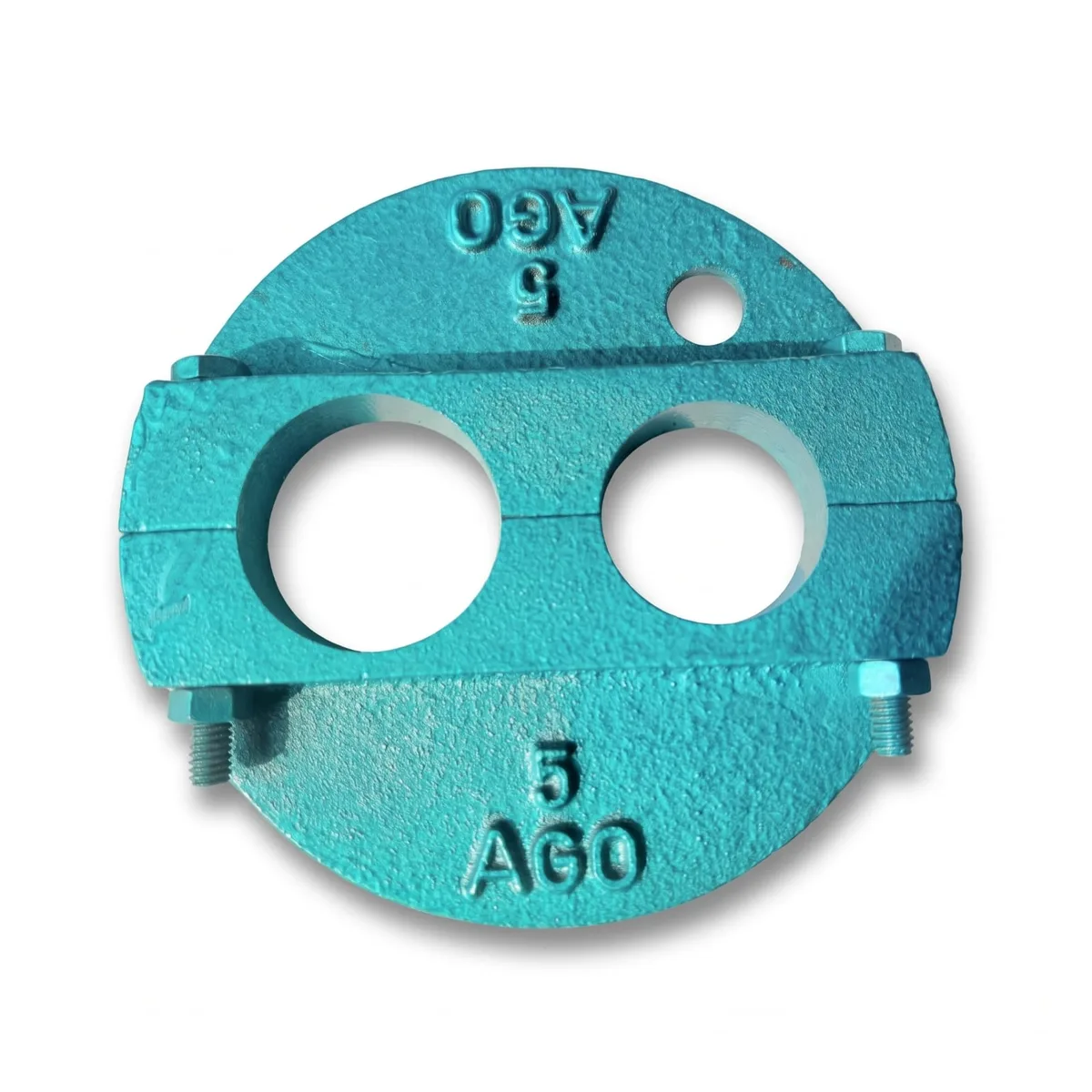
A column pipe clamp is the part of a borewell cap that grips the riser pipe hanging below it, so that the weight of the pipe, the water inside it, the cable and the submersible pump transfers into the bore casing rather than hanging off anything else.
It is the load path of the whole installation. The plate keeps the bore clean; the clamp is what actually holds the pump up.
What it carries
The static load below the clamp is larger than most people estimate, because the column pipe is full of water for its whole length. The hanging weight is the sum of:
- The column pipe itself
- The water standing in the column pipe
- The submersible cable
- The pump and motor assembly
All of that passes through the clamp, into the boss, into the cap plate, and onto the casing rim. Every one of those transitions is a place the load can concentrate, which is why cap failures are nearly always load-path failures — covered in why borewell caps crack.
How it grips
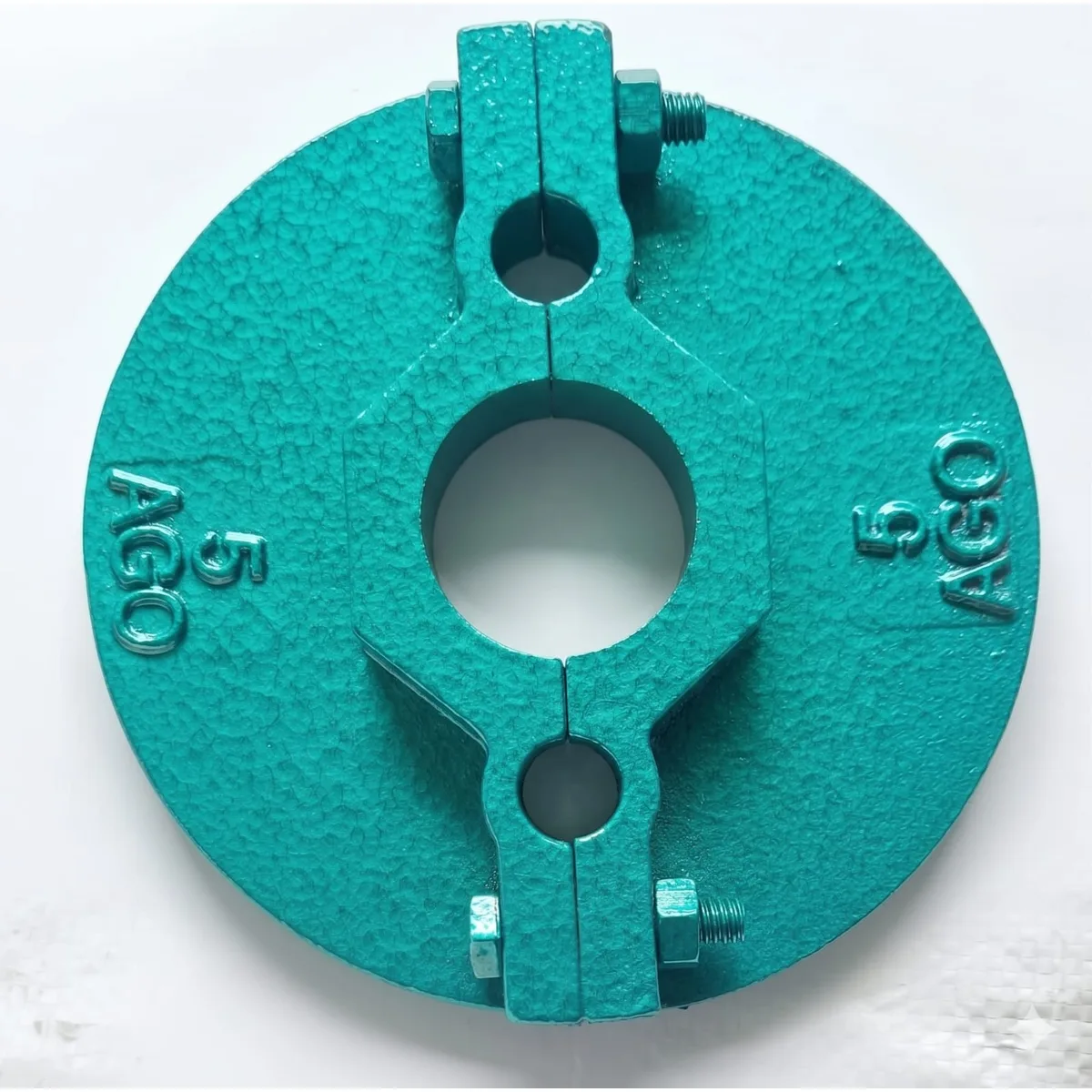
The clamp is split into two halves that close around the pipe and are drawn together with bolts. It does not hold by friction from bolt tension alone — the geometry does most of the work, with the clamp bore machined to close onto the pipe outside diameter so the two halves grip all round before they meet each other.
That is why the clamp bore size matters so much:
- Bore too large: the halves bottom out against each other before gripping the pipe. No amount of torque fixes this.
- Bore too small: the clamp will not close far enough to grip all round.
- Bore correct: the halves grip the pipe with a visible gap still between them.
The forms it takes
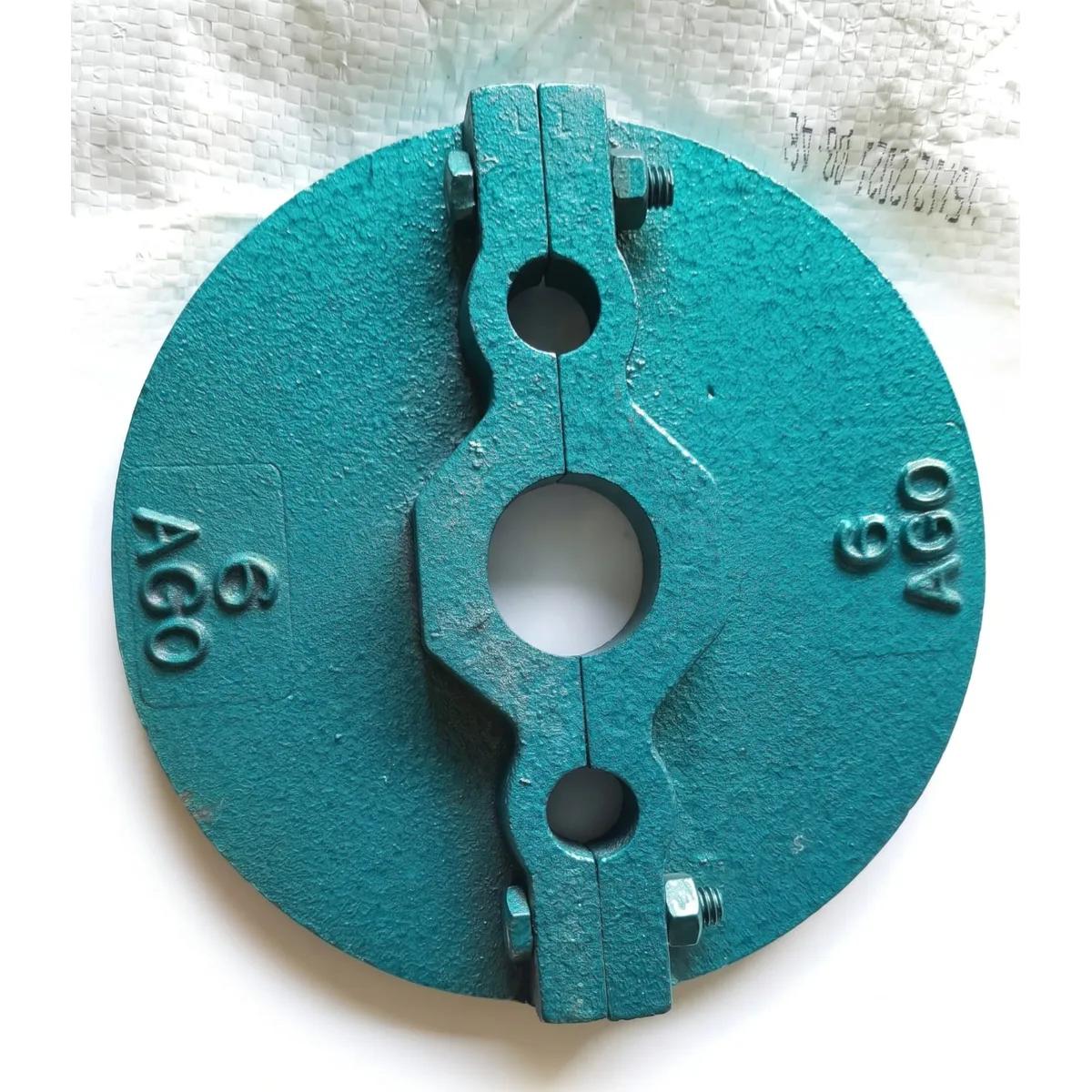
Cast boss clamp
The clamp is formed as a raised boss cast integrally with the plate. Standard on most caps, including the AGO 5" and AGO 6". Compact and economical, and entirely adequate for ordinary domestic and agricultural depths.
The hanging load concentrates where the boss meets the plate, so the fillet radius at that junction does more for service life than anything else on the part.
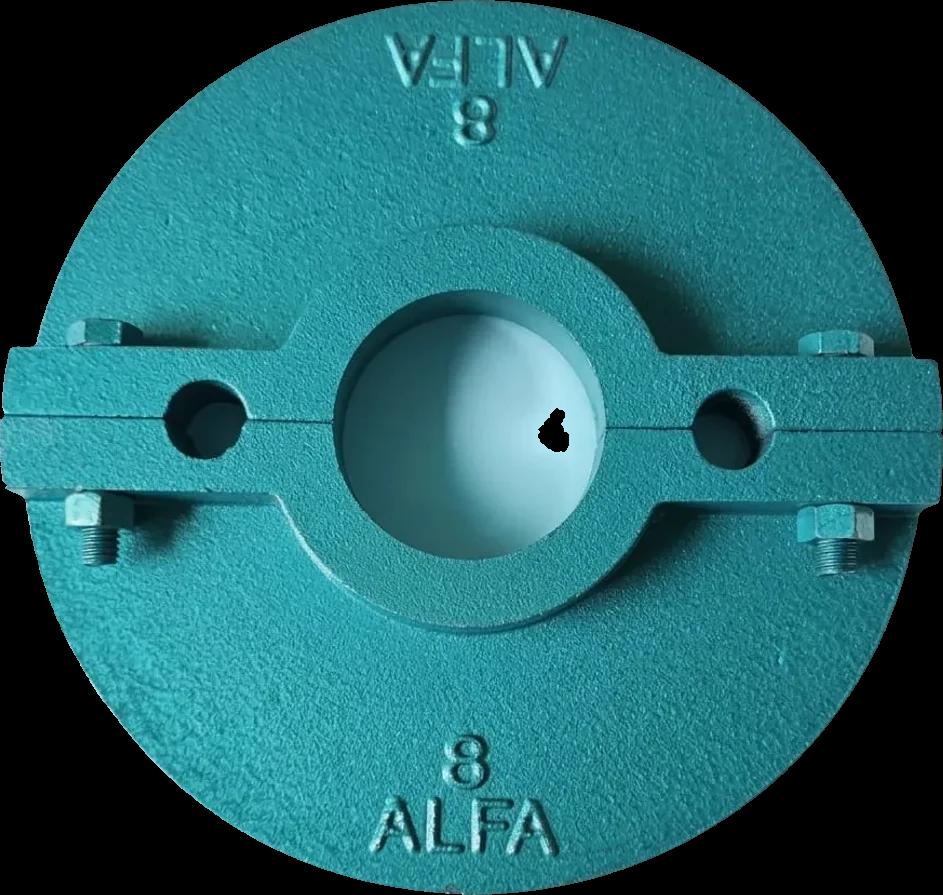
Through clamp bar
A bar passes across the plate and carries the clamp, spreading load into the plate over a wider area rather than into one junction. Heavier, costlier, considerably more forgiving under deep settings and heavy pumps. The ALFA 8" cap uses this arrangement.
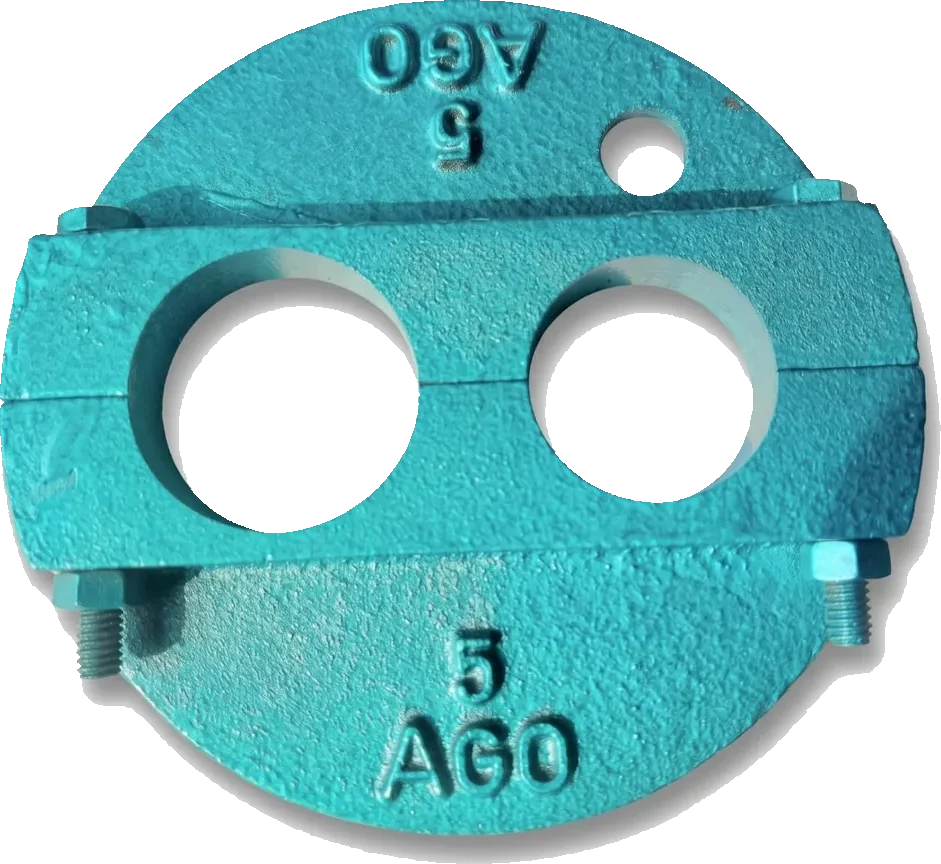
Twin-bore clamp
Two clamped openings in one cap, so that something besides the column pipe — armoured cable, a sounding tube, a chlorine dosing line — passes through under its own clamp rather than sharing the notch. See the AGO twin-bore cap.
How the clamp bore is specified
By the outside diameter of the column pipe — not the nominal bore of the pipe, not the bore casing size, and not the pump rating.
| Measurement | What it sets |
|---|---|
| Bore casing outside diameter | The cap size (4", 5", 6"…) |
| Column pipe outside diameter | The clamp bore |
| Cable type and count | Notch, twin bore or opposed notches |
| Hanging depth and pump weight | Cast boss or through clamp bar |
Two separate diameters, two separate decisions. Ordering a 5" cap tells us the casing; it does not tell us the pipe. Both figures are needed, and the size guide sets out how to take them.
Why not hang the pipe from a flange?
A flanged joint at the bore mouth puts the load into bolts in tension and needs a matching flange welded to the pipe. A split clamp needs nothing attached to the pipe, grips anywhere along its length, and can be released and repositioned when the pump is pulled for service. For a part that will be opened every few years, that matters.
Frequently asked questions
What is a column pipe clamp?
The split clamp below a borewell cap that grips the riser pipe, transferring the weight of the pipe, the water in it, the cable and the pump into the bore casing. It is the load path that holds the pump up.
How is a column pipe clamp size specified?
By the outside diameter of the column pipe. This is a separate measurement from the bore casing diameter, which sets the cap size. Both are needed to order a cap.
What happens if the clamp bore is too big for the pipe?
The two clamp halves bottom out against each other before they grip the pipe, so the clamp never holds properly. Extra bolt torque does not fix it — it loads the halves apart and can split the boss.
Does a column pipe clamp hold by friction?
Partly, but the geometry does most of the work. The bore is machined so that the halves close onto the pipe and grip all round while a gap remains between them. Bolt tension completes the grip rather than providing all of it.
When should I use a through clamp bar instead of a cast boss?
For deep settings and heavy pumps. A cast boss concentrates the hanging load at the junction with the plate; a through bar spreads it across the plate, which is more forgiving when the load is high.